
The Rigid Panels Looked Great. Then You Had to Ship Them.
Anyone who has exhibited at the Georgia World Congress Center knows the moment. The hard-panel display looked sharp in the showroom, but now it travels in a crate the size of a refrigerator, takes two people and an hour to assemble, and shows a glossy reflection of the overhead lights in every product photo. There is a better way to dress a booth, and most Atlanta exhibitors are already moving to it.
Tension fabric displays use a printed stretch fabric pulled tight over a frame. They have quietly become the default for trade show graphics because they solve the three problems rigid panels never could: weight, glare, and setup time.
What "Tension Fabric" Actually Means
The graphic is printed on a polyester stretch fabric using dye sublimation, a process where the ink is turned into gas and bonded into the fibers of the cloth rather than sitting on top of it. Because the color lives inside the fabric, it is vivid, it does not crack, and the fabric stays soft and foldable.
That printed fabric is finished with a thin silicone strip sewn around the edge. The frame has a matching groove, and the silicone edge presses into it like a zipper, pulling the graphic drum-tight across the structure. The industry calls this SEG, for silicone edge graphic, and it is why the surface ends up smooth and seamless instead of saggy.
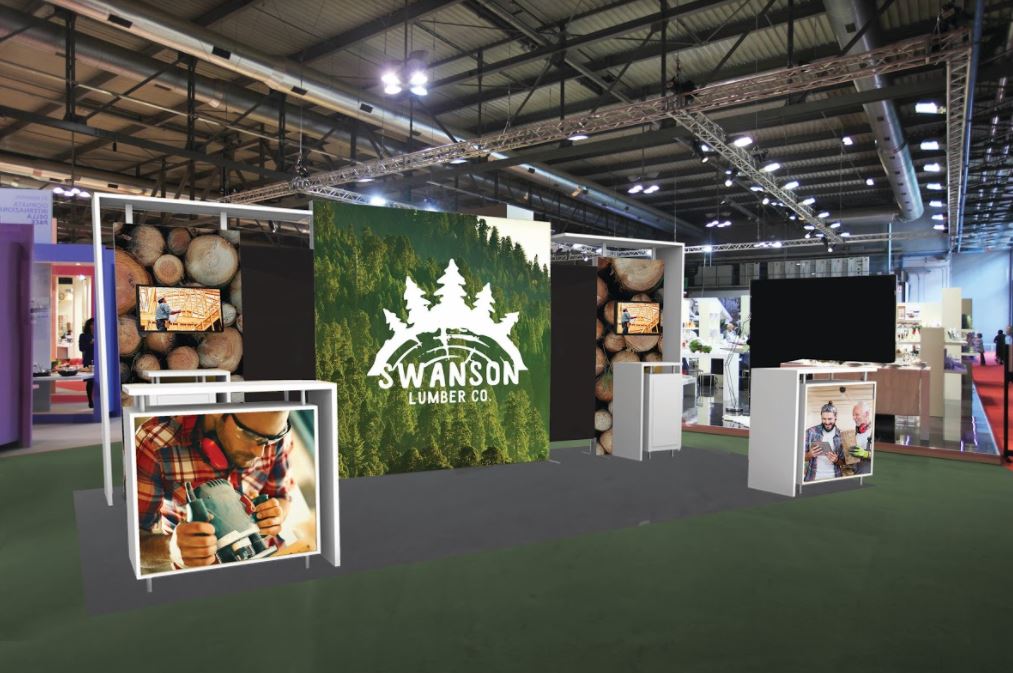
The result reads as one continuous, frameless image. There are no panel seams cutting across your message and no hardware framing the artwork.
Matte Fabric Kills the Glare That Ruins Booth Photos
Convention centers are lit from above with bright, hard light. On a glossy rigid panel, that light bounces straight back, washing out the graphic from certain angles and showing up as hotspots in every photo your team posts later.
Fabric is matte. It diffuses that overhead light instead of reflecting it, so the graphic reads evenly from across the aisle and photographs clean. For exhibitors who spend the show capturing content for social media, that difference alone is worth the switch.
It Packs Small and Sets Up Fast
This is where fabric wins the logistics fight. The frame breaks down into lightweight poles or a collapsing tube structure, and the graphic folds up like a bedsheet. A backwall that would have shipped in a heavy crate now fits in a padded case a person can roll through the loading dock.
Setup is just as different. The frame pushes together, the fabric zips into the channel, and the booth is up, often without tools and often by one person. For a company doing multiple shows a season around Atlanta and beyond, the savings in freight and labor add up across the year.
Fabric also forgives the abuse of travel. A creased fabric graphic relaxes and the wrinkles fall out, where a scuffed or chipped rigid panel is simply damaged. And when a show theme changes, you often keep the same frame and just print a new fabric skin, which is cheaper than rebuilding the whole structure.
Where Rigid Still Has a Place
We are not going to tell you fabric is always the answer. Rigid substrates still win where you need a hard, durable surface: a counter top, a shelf, a freestanding sign that has to take knocks, or a high-gloss finish used deliberately for effect. The honest framing is that fabric owns the large background and feature walls, while rigid materials handle the structural and high-contact pieces.
Many of the best booths we help build across metro Atlanta use both, fabric for the big seamless graphics and rigid panels where the booth needs to stand up to hands and weight.
Designing for Stretched Fabric
One design note matters: the fabric stretches over the frame, so artwork is built with that pull in mind, and anything critical is kept away from the very edges where the silicone channel and corners live. We prepare files so your logo and headline land where the fabric sits flat and true, not where it wraps around an edge.
Practical Takeaways
If glare, shipping weight, or slow setup are pain points at your shows, tension fabric is likely the upgrade. Expect seamless, matte, photo-friendly graphics that pack into a fraction of the space and go up fast, with the option to reprint the skin while reusing the frame. Keep rigid materials for counters, shelves, and high-contact surfaces.
We produce tension fabric displays and full trade show graphics packages for exhibitors working the Georgia World Congress Center and shows across the region. Tell us your booth size and how often you travel, and we will help you build a display that looks sharp on the floor and easy in the crate.
Ready to Get Started?
Contact Extreme Color today for vehicle wraps, signs, banners, and more.
Get a Free Quote