
Most window film gets installed once and then forgotten, which is exactly how it should work for years. But film is a product, not a permanent feature of the building, and eventually it reaches the end of its life. The trouble is that failing film rarely announces itself. It creeps, and by the time a manager notices, the glass has looked tired to customers for months.
We get calls about this constantly from businesses along Buckhead's retail corridors, in Midtown office towers, and in the strip centers ringing I-285. Someone finally looks up and realizes the front windows have gone patchy or purple. So let's talk about how to read the signs, and what actually happens when you re-do the glass.
The Purple Giveaway
If your window film has turned a dull purple or bronze, it is telling you the dyes have broken down. Older dyed films rely on color pigments to control light and heat, and ultraviolet exposure slowly bleaches those dyes. Purple is the color that is left when the others give out.
Atlanta is hard on film for exactly this reason. Our summers are long, the sun angle is high, and south- and west-facing glass takes a punishing amount of UV every year. Film that might last a long time on a shaded northern exposure can age noticeably faster on the sunny side of the same building. That is why you will sometimes see one wall of a storefront looking fine while another has gone purple, even though both were installed on the same day.
Bubbles, Haze, and Peeling Edges
Color is only one failure mode. The other big one is adhesive breakdown, and it shows up as bubbling. Small bubbles that were not there at installation, especially ones that spread over time, mean the layer holding the film to the glass is letting go. A little cloudiness or haze across the pane is the same story told more quietly.
Peeling and lifting edges are the most obvious sign, and also the one most likely to spread. Once a corner starts curling, it catches on cleaning cloths and fingers, and the lift travels inward. Silvering, where the reflective layer starts to separate and look like scratched mirror, is another late-stage symptom.
None of these fix themselves. Film does not heal, and a bubbled or peeling pane only gets worse with more sun and more handling. When you start seeing these, the question is no longer whether to replace, but when.
Why Old Film Has to Come Off First
People sometimes ask whether we can just put fresh film over the old. We cannot, and you would not want us to. New film needs to bond to clean glass, not to a failing layer underneath. Applying over old film traps every flaw below the surface and guarantees the new layer fails early too.
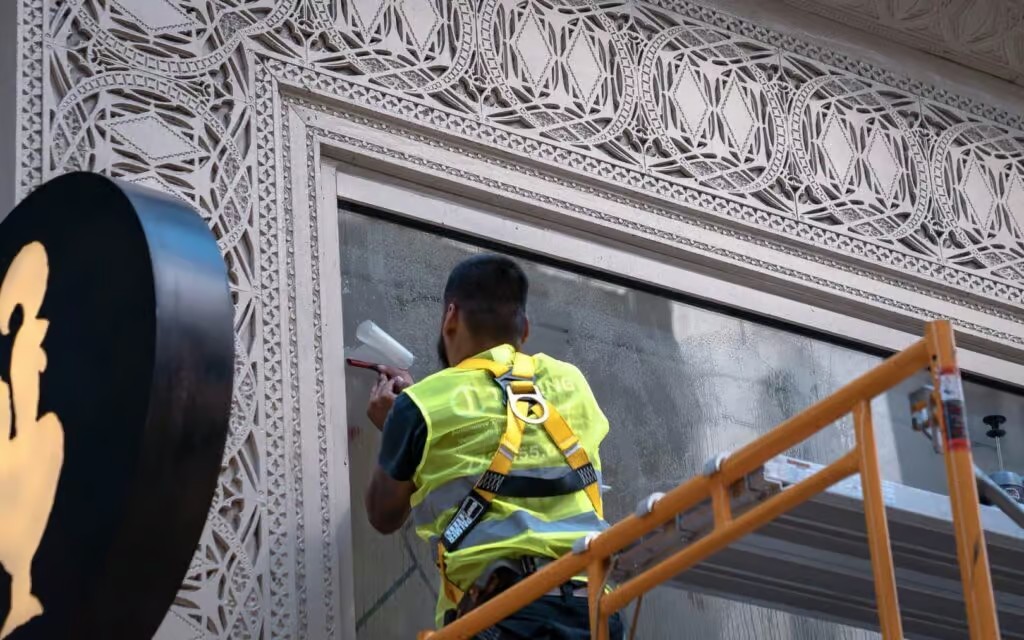
So a proper re-do starts with removal, and removal is honestly the part that takes the skill. Film that has aged and hardened does not peel off in one satisfying sheet. It tends to come away in strips, and the adhesive stays behind on the glass. Getting a pane back to truly clean, streak-free, adhesive-free glass is careful work, and it is where a rushed job leaves haze that shows the moment the sun hits it.
Once the glass is clean and dry, the new film goes on the same way it would on a brand-new window. The difference a fresh install makes is dramatic precisely because people have been looking at the tired version for so long.
A Chance to Reassess, Not Just Replace
Replacing film is a good moment to ask whether the old film was even the right film. Products have improved, and a lot of the purple film we remove was doing a job that newer film does better and longer.
If the original film was there for heat, this is the time to consider whether a better-performing solar film would cut cooling costs more effectively through an Atlanta summer. If it was there for privacy, you might switch from a dyed film to a frosted or decorative option that will not fade the same way. If a storefront wants its glass to do more than block sun, replacement is also the natural time to add printed window graphics, address numbers, or hours to the same panes. Re-doing the glass is rarely just a like-for-like swap when you think it through.
Practical Takeaways
Walk your own glass a couple of times a year, and pay special attention to the south and west exposures where Atlanta sun does the most damage. If you see purple or bronze color shift, spreading bubbles, haze, silvering, or edges that are starting to lift, the film is at the end of its life and the look of your storefront is quietly suffering for it.
When you do replace, insist that the old film comes off completely and the glass is cleaned back to bare before anything new goes on, because that step determines whether the new film looks right or hazy. And treat the swap as a decision, not a default: confirm the replacement film matches what that particular window actually needs today. Our team handles removal and re-filming together, so the glass goes from tired to clean in one pass. If your windows are looking their age, we are happy to take a look.
Ready to Get Started?
Contact Extreme Color today for vehicle wraps, signs, banners, and more.
Get a Free Quote