
The Sign Nobody Notices Until It's Missing
A film production is a small city that appears overnight and vanishes by morning. On any given week in Atlanta, a crew of two hundred people, dozens of trucks, and a fleet of talent vans need to find the same patch of pavement they've never been to before. When the wayfinding is good, nobody thinks about it. When it's missing, a grip spends twenty minutes circling a Cabbagetown block looking for crew parking while the clock burns.
We work with productions across metro Atlanta, and the request that comes up again and again isn't glamorous. It's arrows. Clear, weatherproof, readable-from-a-moving-car arrows that get people where they need to be. Basecamp signage is the connective tissue of a location shoot, and getting it right is a craft of its own.
Why Location Shoots Live and Die on Signage
Atlanta productions rarely shoot on a tidy studio lot. They shoot in a warehouse off Marietta Street, a Victorian in Inman Park, a stretch of the BeltLine, or a parking deck downtown. That means the crew is navigating real neighborhoods with real traffic, often before sunrise, frequently in the rain.
The people reading your signs are exhausted and moving fast. A camera assistant behind the wheel of a cube truck has a few seconds to spot an arrow, read it, and commit to a turn. If the letters are too small, the contrast is too weak, or the sign is flapping in the wind, the message is lost. Good production wayfinding assumes the worst conditions and still reads clean.
The Anatomy of a Basecamp Sign Package
A typical location package is a system, not a single sign. It starts with the approach: directional arrows placed at every decision point from the nearest major road, whether that's Ponce de Leon, Memorial Drive, or Northside. Each arrow uses the production's code name rather than the title, because a shoot that advertises itself invites onlookers and inflates location fees.
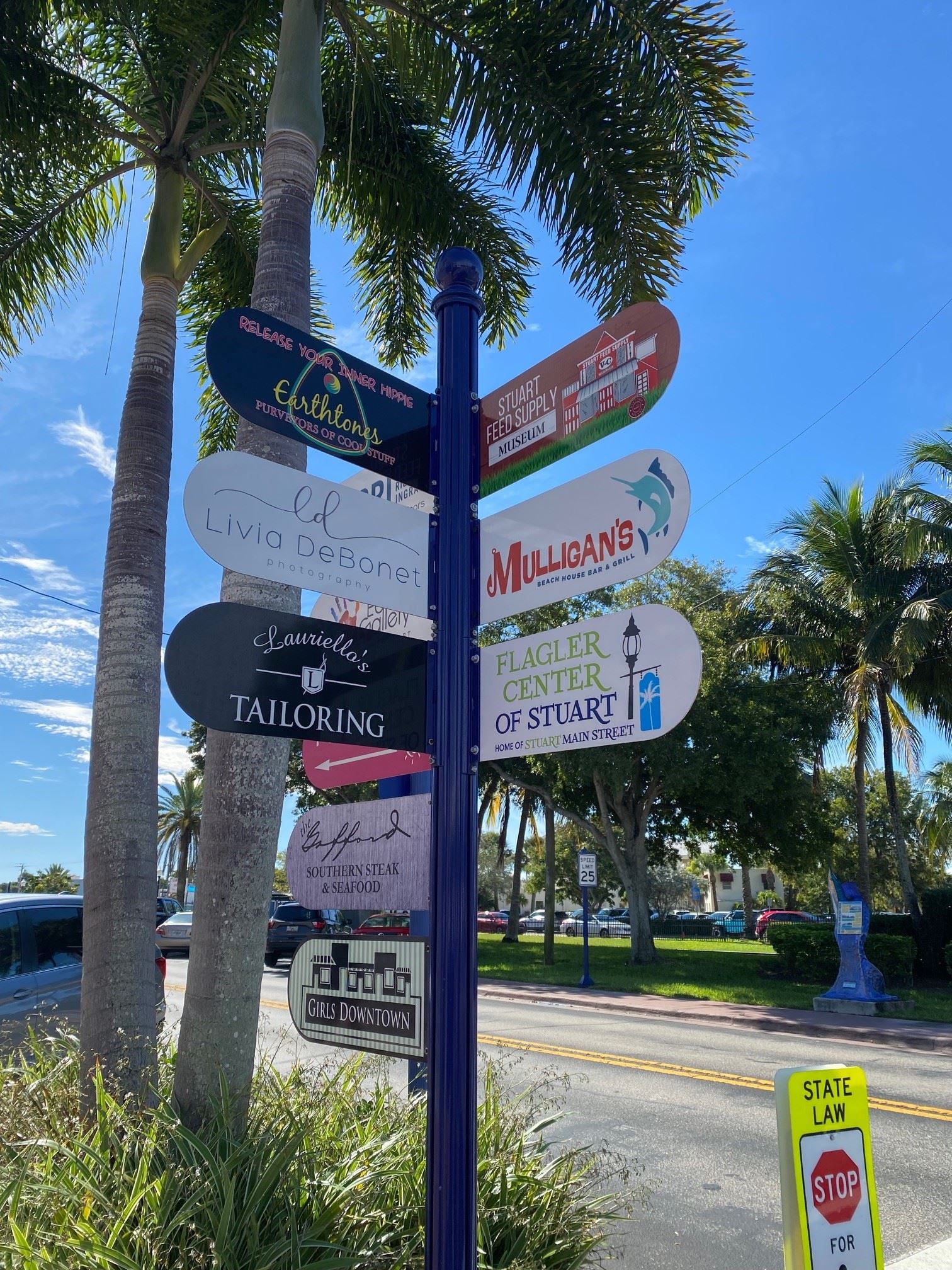
From there the package fans out into the zones every basecamp needs to label. Crew parking, talent parking, and truck staging each get their own signs. Then come the department markers: hair and makeup, wardrobe, catering, the production office, honeywagons, and the set entrance itself. On a spread-out location, wayfinding between these zones matters as much as getting people onto the lot in the first place.
Materials That Survive a Shoot
Set signage takes abuse. It gets zip-tied to chain-link, staked into medians, taped to cinder-block walls, and left out through whatever Georgia weather rolls through. For most directional work, corrugated plastic is the workhorse. It's light, it's rigid enough to stay flat in wind, it's cheap enough to leave behind or recycle, and it takes vinyl lettering cleanly.
For signs that need to last a multi-week shoot or read from a distance, we move up to rigid substrates with a printed or applied graphic. When a sign has to mount to a stand and survive repeated setups and strikes, durability earns its keep. The right material depends on how long the sign lives and how hard its life will be, and matching the two is where experience pays off.
Design Rules for Signs Read at Speed
The design language of production signage is deliberately blunt. High contrast is non-negotiable: dark type on a light field, or the reverse, with nothing in between. Arrows are oversized and unambiguous, pointing in one clear direction rather than a vague diagonal that could mean two turns.
Type is set large and sans-serif, with only the words that matter. "CREW PARKING" and an arrow beats a paragraph every time. We keep the code name consistent across the entire package so a driver who learned it on the highway approach recognizes it at the gate. Consistency is what turns a pile of individual signs into a system someone can actually follow.
Quantities, Turnaround, and Planning Ahead
Location managers and production coordinators tend to think in terms of the whole run, not a single day. A show that moves to a new location every few days needs a repeatable kit, and reprinting the same directional set with a new code name is a routine ask. Planning the package before the location scout is locked saves a scramble later.
Our advice to Atlanta productions is to treat signage as part of the location prep, not an afterthought the night before. Walk the approach the way a truck driver will. Note every intersection where someone could go wrong. Count your zones. That walk-through is what tells you how many signs you actually need and where they have to go.
The Takeaway
Wayfinding is one of those crafts that only gets noticed when it fails. For film and television work around Atlanta, a well-built basecamp signage package keeps the trucks moving, the crew calm, and the schedule intact. We specialize in large format printing and signage, and helping productions get their people to set is one of the parts of the job we enjoy most. If you're prepping a location shoot, plan your sign package early, keep the messaging blunt, and match your materials to the length of the run.
Ready to Get Started?
Contact Extreme Color today for vehicle wraps, signs, banners, and more.
Get a Free Quote