
A lot of buying decisions get made in the last three feet, standing in the aisle with the product in reach. That is the exact spot a point-of-purchase display is built to own. It is print that does not just inform from a distance the way a banner does; it sits right where the hand reaches and the wallet opens, and it makes the case one more time at the moment of decision.
We produce these displays for brands, distributors, and retailers all over metro Atlanta, from shops in Ponce City Market to grocery and convenience chains spread across the suburbs. What they have in common is that they are trying to win the shelf, and a well-built display is one of the most cost-effective ways to do it.
What Counts as Point-of-Purchase
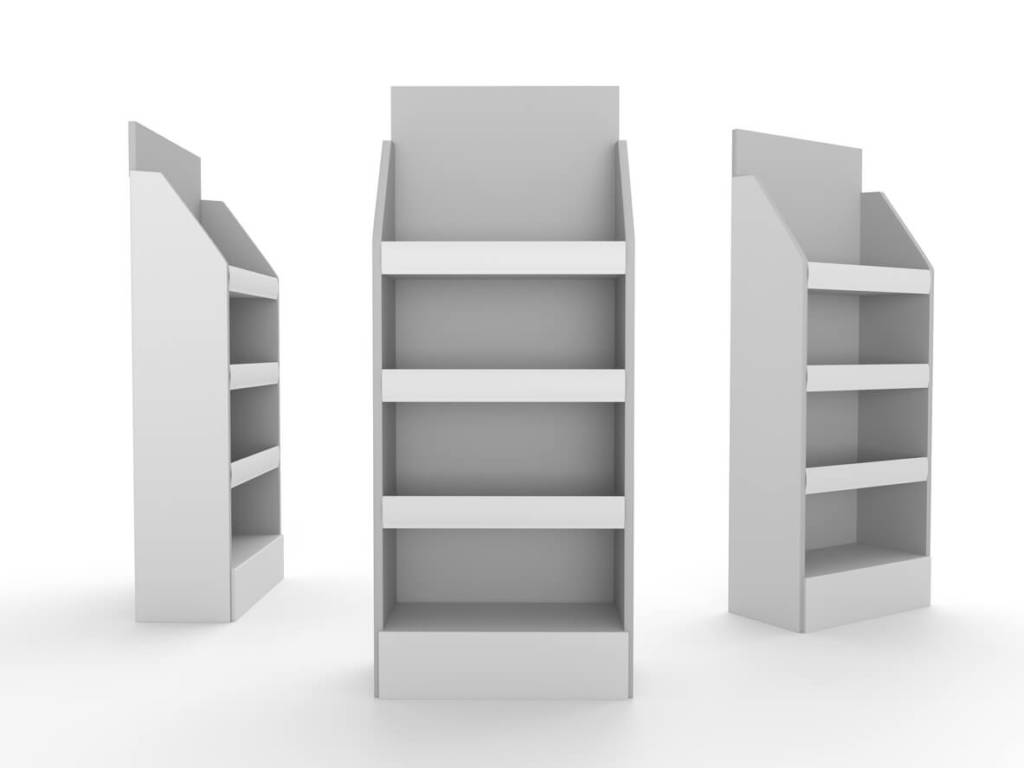
Point-of-purchase, or POP, is a broad category, but it lives in a few common forms. There are countertop displays that sit by the register for impulse buys. There are freestanding floor displays that hold product and stand on their own in an aisle or an endcap. There are shelf talkers and header cards that clip onto existing fixtures. And there are standees, the freestanding cardboard cutouts, often life-size, that put a product, a character, or a person right in the aisle.
A standee is the showman of the group. Because it is a cutout with a contour edge rather than a rectangle, it reads as a presence in the room rather than a poster on a stand. That is why you see them used for movie releases, new product launches, and any promotion that wants to physically stop a shopper walking by.
Print, Mount, and Cut
Most POP work is a three-step build, and each step affects how the final piece looks and lasts. First we print the graphics at full wide-format resolution, because these pieces get looked at up close and any softness shows. Then the print gets mounted to a substrate that gives it body, and the substrate choice is the real decision.
Lightweight corrugated cardboard is the workhorse for standees and temporary floor displays. It is inexpensive, it ships flat, and it holds up fine for the run of a promotion. For something meant to stay out longer or take more handling, we mount to sturdier rigid board that resists dinging and warping. A countertop unit that will live by a busy register wants more durability than a two-week standee for a weekend event.
The third step is the cut. A rectangular display is a straight trim, but a standee or a shaped display needs a contour cut that follows the artwork's outline. That cut is what turns a printed panel into a figure, and clean cutting is a big part of why a professional standee looks like a display and a homemade one looks like a science project. We also build in the easels, foot bases, and fold-out supports that make a freestanding piece actually stand without tipping.
Designing for the Aisle
A POP display competes with everything else screaming for attention in a retail environment, so it has to work fast and from an angle. The message needs to land in a glance, the product or offer should be the obvious hero, and the color has to punch enough to pull an eye that is already scanning a busy shelf.
Structure is part of the design, not separate from it. A floor display that holds product has to present that product at a reachable height and refill easily, or store staff will quietly retire it to the back room. A countertop unit has to earn its footprint on crowded register space. We think about how the piece gets stocked and where it physically goes, because a display that annoys the store does not stay on the floor long, no matter how good the graphics are.
Shipping, Setup, and Short Runs
A practical advantage of cardboard-based displays is that they ship and store flat, then fold or slot together on site in a few minutes without tools. For a brand rolling the same display out to a dozen locations, that matters as much as the look. We design the assembly so a store associate can set it up correctly from a printed instruction, not a phone call.
Wide-format printing also makes short and mid-size runs practical, which suits the way most promotions actually work. You are rarely producing tens of thousands of identical displays; you are producing enough for a specific campaign, a set of locations, or a single flagship store. Printing to the quantity you need keeps a promotion from turning into a warehouse full of leftover cardboard.
Practical Takeaways
If you sell through retail, the last three feet are where a lot of the decision happens, and point-of-purchase displays are how you show up there. Match the substrate to the lifespan: light corrugated for short promotions and standees, sturdier rigid board for anything that has to last or take handling. Lead the design with one clear offer or hero product, because an aisle gives you a glance, not a read.
Plan the structure alongside the graphics so the piece stands straight, stocks easily, and does not get in the store's way. And produce to the quantity your campaign actually needs rather than overordering. Our team handles the full build, printing, mounting, contour cutting, and the supports that make it stand, for retailers and brands across Atlanta. If you want your product to make its case at the shelf, we can help you put it there.
Ready to Get Started?
Contact Extreme Color today for vehicle wraps, signs, banners, and more.
Get a Free Quote