
Look down the next time you walk through a busy retail space, a trade show floor at the Georgia World Congress Center, or the entrance of an event at Mercedes-Benz Stadium. The floor is enormous, it is unavoidable, and almost nobody uses it. Floor graphics turn that overlooked surface into branding, wayfinding, and crowd direction, and they do it in the one place every visitor is guaranteed to look.
What Makes a Graphic Walkable
A floor graphic is not just a sticker on the ground. The thing that makes it work is a textured, slip-resistant laminate bonded over the printed vinyl. That overlaminate does two jobs at once. It protects the print from the constant abrasion of foot traffic, rolling carts, and dragged luggage, and it provides the slip resistance that makes the graphic safe to walk on, even when it gets wet near an entrance.
Without that laminate, a printed vinyl on the floor scuffs through in days and turns into a slip hazard the first time it rains. This is why floor graphics are a specific product and not just regular signage laid flat. The construction is built for the abuse that floors take.
Know Your Floor Before You Print
The single biggest factor in whether a floor graphic succeeds is the surface it is going onto. Smooth, sealed surfaces like polished concrete, vinyl tile, sealed hardwood, and clean commercial flooring are ideal, because the adhesive can make full contact and the graphic stays put. Rough, porous, or heavily textured surfaces like raw concrete, brick pavers, or textured rubber are much harder, because the adhesive only touches the high points and the edges lift.
Outdoor surfaces and uneven ground, like a sidewalk along the Beltline or a brick courtyard in an Atlanta event space, need specific outdoor-rated materials designed to conform and grip, and even then the lifespan is shorter than an indoor install. We always ask what the floor is made of and whether it is indoor or outdoor before recommending a material, because the wrong combination peels.
Branding That People Walk Toward
The most common use is simple brand presence. A logo at an entrance, a repeating pattern down a main aisle, or a large branded graphic in the center of a booth gives a space identity from the ground up. At a trade show, where every exhibitor is fighting for attention at eye level, a bold floor graphic pulls the eye down and out, marking your footprint on a crowded floor and drawing people into your space.
Retailers use the same idea to anchor a department, highlight a product launch, or carry a seasonal campaign all the way to the floor so the branding feels complete rather than stopping at the walls and shelves.
Wayfinding and Directing the Crowd
Floor graphics are unmatched for moving people. Arrows, footprints, lane markings, and directional text on the floor guide visitors through a space without a single staff member pointing the way. For a large event, a multi-level retail store, or a venue managing the flow of a big Atlanta crowd, that is genuinely useful infrastructure. People follow lines on the ground almost without thinking.
This same capability covers practical needs like marking queue lines, indicating entrances and exits, flagging spacing in a waiting area, or routing foot traffic around a construction zone inside a building. When the floor tells people where to go, you need fewer signs at eye level and fewer staff managing the crowd.
Shape and Size Are Wide Open
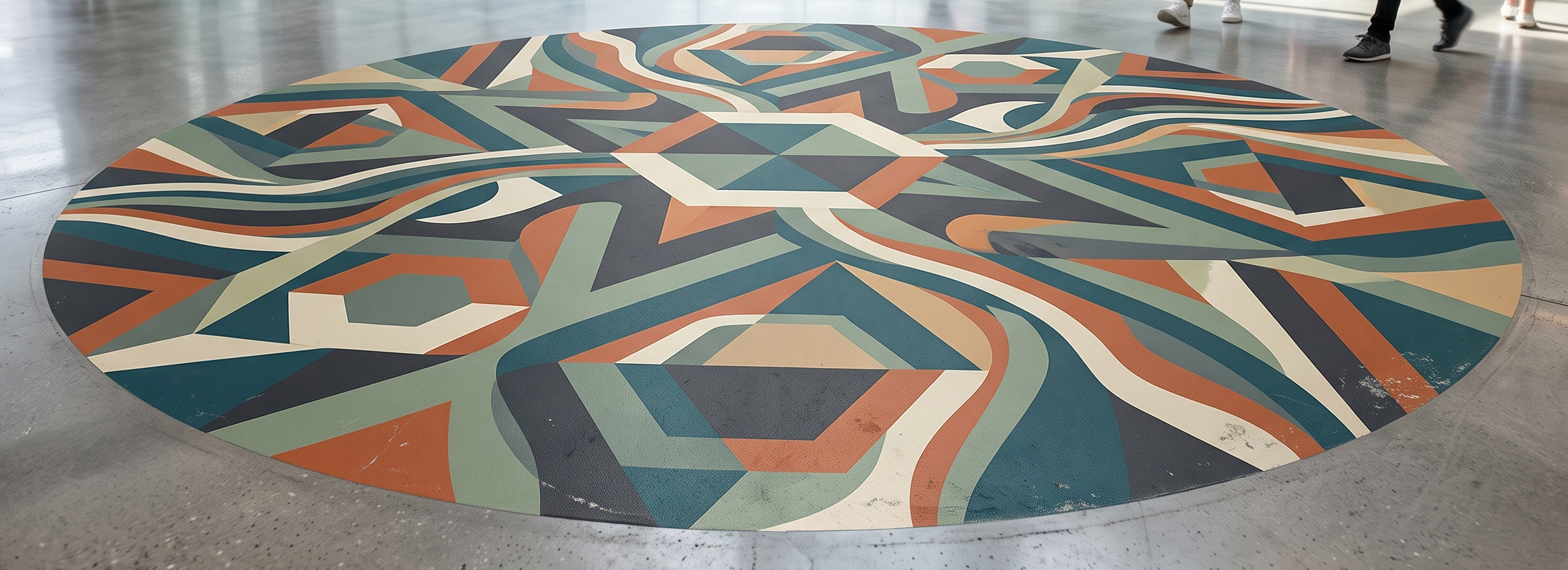
Because we print and contour-cut these graphics, they are not limited to rectangles. A floor graphic can be a perfect circle around a feature display, the exact outline of a logo, a set of individual footprints leading to a door, or a long directional stripe running the length of an aisle. That flexibility is part of what makes floor graphics feel intentional rather than tacked on. The graphic matches the idea instead of forcing the idea into a standard sign shape.
Plan for the Lifespan
Floor graphics are often temporary by design, and that is a feature. A graphic for a weekend event, a month-long promotion, or a single trade show is meant to go down clean and come up clean. Removable floor materials are built to do exactly that on the right surface, lifting away without leaving adhesive behind. For longer-term installs in a permanent retail space, more durable materials hold up to months of heavy traffic. We match the material to how long you need the graphic to live, because a one-weekend decal and a year-long install are different products.
One honest note: floors are high-traffic, and even the best walkable graphic in a doorway taking thousands of steps a day will eventually show wear. We are straight with clients about expected lifespan in their specific location so the timeline matches reality.
The Practical Takeaways
The floor is advertising real estate you already own, and walkable vinyl with a slip-resistant laminate lets you finally use it. Tell us what the floor is made of and whether it is indoor or outdoor, because the surface drives everything. Use floor graphics for branding that completes a space, for wayfinding that moves a crowd without staff, and for any shape your idea needs. Then match the material to how long the graphic has to last.
Our team produces floor graphics for retailers, event producers, and exhibitors across metro Atlanta. If you have a hard floor and a message, we can help you put it underfoot where everyone will see it.
Ready to Get Started?
Contact Extreme Color today for vehicle wraps, signs, banners, and more.
Get a Free Quote