
The Square Footage You Forgot You Had
Walk through any office tower in Midtown or any mixed-use development on the BeltLine and count the blank vertical surfaces. Elevator doors. Structural columns. Stairwell walls. Parking deck pillars. Buildings are full of surfaces everyone passes and nobody uses, while marketing teams argue over one crowded lobby wall.
Wide format printing changed this math years ago. Conformable vinyls and durable laminates mean almost any smooth vertical surface in a building can carry a printed graphic. The elevator door you stare at for thirty seconds is advertising space. The columns in your showroom are brand real estate. Here is how Atlanta businesses and properties are putting those surfaces to work.
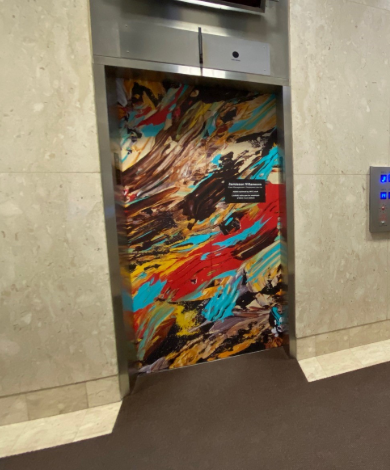
Elevator Doors: A Captive Audience Twice a Day
Nowhere else in a building do people stand still, facing one direction, with nothing to look at. Elevator door graphics take advantage of the most predictable sight line in architecture. When the doors close, the graphic is the room.
Property managers use elevator wraps for building branding and tenant amenities. Retailers and gyms use them for promotions. Hotels use them to sell the rooftop bar to every guest who rides. And because the doors part in the middle, designs that split and reunite, or reveal something when they open, add a little theater to the ride.
Inside the cab works too. Elevator interiors can carry printed panels that turn a plain ride into a branded moment. For film and event work, we have seen elevator graphics transform a building's whole character overnight.
Columns: The Obstacle That Becomes an Asset
Columns are usually treated as a design problem, the thing blocking the view, the obstacle the layout works around. Wrapped in print, they become the thing people navigate by. In a retail space, column wraps carry seasonal campaigns at eye level right in the traffic flow. In a parking deck, color-coded column graphics are the difference between finding your car and wandering level three. In an office, wrapped columns carry brand values, wayfinding, or art.
Round columns need conformable material and an installer who knows how to work a curve without wrinkles or seams in the wrong place. Square columns are more forgiving and can be treated as four small billboards. Either way, the surface must be smooth and sound. Raw concrete, heavy texture, or peeling paint calls for either surface prep or a material engineered for rough surfaces, which is a conversation to have before printing, not after.
Stairwells, Corridors, and the In-Between Spaces
The vertical surfaces between destinations shape how a building feels. Stairwell graphics encourage people to skip the elevator, which wellness-minded offices love. Corridor walls in gyms, schools, and medical offices carry motivation, wayfinding, and branding through spaces that would otherwise be drywall tunnels. Even door faces, all of them, are printable surfaces that can carry room identification or design.
These spaces are also where graphics do quiet cultural work. An employee who walks past their company's mission rendered beautifully at full height experiences it differently than one who reads it in an onboarding PDF.
What Property Managers Need to Know
The first question we hear from building owners and property managers is always the same: what happens when it comes down? The answer depends entirely on choosing the right material up front. Removable vinyls are designed to come off clean from painted drywall, metal, and glass, which makes vertical graphics practical for leased spaces and rotating campaigns. Long-term graphics can use more permanent materials when the installation is measured in years.
Durability is the other planning question. An elevator door gets touched, bumped, and cleaned constantly, so it wants a laminated graphic that can take the abuse. A column in a parking deck lives with exhaust, moisture, and the occasional bumper. Material selection is not an afterthought; it is the difference between a graphic that looks sharp for years and one that peels in a season.
Designing for Tall and Narrow
Vertical surfaces come in awkward proportions, and designs that work on a wide banner fail on a skinny column. A few rules we follow: put the key message at standing eye level, roughly five feet, regardless of how tall the surface is. Use the height for imagery and color, not for text nobody will crane their neck to read. On elevator doors, keep critical content away from the center split and the edges. And design for the viewing distance, close-up surfaces like elevator doors reward detail, while parking deck columns need bold and simple.
The Takeaway
Before renting advertising space or fighting over the lobby wall, look at the vertical surfaces your building already owns. Elevator doors, columns, stairwells, and corridors can all carry print that brands the space, guides people through it, or sells to a captive audience. Choose removable materials for leased spaces and rotating campaigns, durable laminates for high-touch surfaces, and designs built for the shape and viewing distance of each surface.
We survey, print, and install vertical surface graphics for offices, retail spaces, garages, and venues across metro Atlanta. If your building has blank surfaces and your brand has something to say, we can help you match one to the other.
Ready to Get Started?
Contact Extreme Color today for vehicle wraps, signs, banners, and more.
Get a Free Quote